
Fire Safety Equipment: Everything You Need to Protect Your Home and Workplace
- April 6, 2026
- 9 Min Read

- Smoke alarms cut your risk of dying in a home fire by nearly half.
- Smoke alarms, extinguishers, and sprinklers must work together, not in isolation.
- If a fire has spread beyond control, evacuate immediately, don’t reach for the extinguisher.
- Server rooms and commercial kitchens need targeted suppression beyond standard sprinklers.
- Fire safety equipment treated as a one-time purchase will fail when it matters most.
Every seven minutes, a home fire is reported somewhere in the United States. Most of them were preventable. A large number of the fatalities that occur happen in homes where working smoke alarms were absent or fire safety equipment had not been maintained. That is not a statistic to read and move on from; it is a prompt to act.
Whether you are a homeowner trying to protect your family, a business owner responsible for your employees, or a fire safety professional managing compliance across multiple properties, understanding which fire safety equipment you need and how to use it can make a genuine difference. This guide covers the essential fire safety equipment every home and workplace should have, how each piece works, and what proper maintenance looks like in practice.
Table of Contents
Make Winning Quotes in Minutes – For Any Industry And Any Job

Why Is Fire Safety Equipment So Important?
According to the National Fire Protection Association (NFPA), smoke alarms cut nearly in half the risk of dying in a home fire. Every day, seven people die in home fires across the country, and the majority of those deaths occur in homes without working smoke alarms. These are not edge cases they are the predictable result of being unprepared.
Fire safety tools do not just limit property damage. They buy time. And in a fire, time is the only currency that matters. The right fire safety equipment, installed correctly and maintained regularly, gives families and workers the window they need to escape before flames and smoke make evacuation impossible.
The good news is that being prepared does not require a complicated setup. It requires the right equipment, placed in the right locations, and checked on a consistent schedule.
What Is the Essential Fire Safety Equipment Every Home and Workplace Needs?
Essential fire safety equipment includes smoke alarms, carbon monoxide detectors, fire extinguishers, fire blankets, sprinkler systems, fire escape ladders, and emergency lighting. Each serves a distinct purpose, and none works well in isolation. A home with a fire extinguisher but no smoke alarm is only half-protected and the half that is missing is the warning system.
Smoke Alarms
Smoke alarms are the foundation of any fire safety setup. They are designed to detect smoke early often before flames are even visible and sound an alarm that gives occupants enough time to evacuate safely. Smoke alarms are essential in detecting fires and giving families an early warning that can mean the difference between a safe exit and a tragedy.
In a home, smoke detectors should be installed on every level, inside every bedroom, and outside each sleeping area. For workplaces, smoke detectors need to cover all occupied spaces in line with local fire safety regulations and NFPA 72 requirements. The general rule: if someone could be in that space during a fire, there should be a smoke alarm covering it.
You should test your smoke alarms at least once per month using the test button and replace the batteries every 6 months. Smoke alarms more than 10 years old should be replaced, regardless of whether they appear to be functioning.
Carbon Monoxide Detectors Alongside Smoke Alarms
Carbon monoxide is created when fuels burn incompletely in furnaces, gas ranges, water heaters, fireplaces, and vehicles running in attached garages. It is colorless and odorless, so without a detector there is no way to know it is present until symptoms appear. According to the Centers for Disease Control and Prevention (CDC), more than 400 Americans die from unintentional carbon monoxide poisoning every year.
Carbon monoxide detectors should be installed on every level of your home and outside each sleeping area. In a workplace, placement should reflect where fuel-burning equipment operates. Like smoke alarms, carbon monoxide detectors need monthly testing and battery changes every six months. Combination smoke alarm and carbon monoxide detector units are a practical choice for homes that want consolidated coverage without doubling the number of devices on the ceiling.
Fire Extinguisher
A fire extinguisher is one of the most recognizable pieces of fire safety equipment and one of the most misunderstood. Fire extinguishers should only be used on small fires in their early stages. If a fire has grown beyond what a single extinguisher can contain, the priority is evacuation, not suppression.
Fire extinguishers should be kept on every level of your home, including the kitchen and garage two of the highest-risk areas for residential fires. In the workplace, OSHA standards require that extinguishers be mounted, located, and identified so they are easily accessible to employees without exposing them to potential injury.
When using a fire extinguisher, remember the word PASS: Pull the pin, Aim low at the base of the flames, Squeeze the lever slowly, and Sweep the nozzle from side to side. Fire extinguishers should be inspected annually by a qualified technician to confirm they are fully charged and ready for use. You should only use a fire extinguisher if you are trained on how to operate one — using it incorrectly can make a situation worse.
Fire Blankets
Fire blankets are underused pieces of fire safety equipment that deserve more attention. They work by smothering small fires cutting off the oxygen supply that flames need to survive. Fire blankets are especially useful in kitchens, where grease and oil fires can flare up quickly and should never be doused with water.
Beyond smothering small fires, fire blankets can be used to protect individuals during evacuation wrapping around a person to shield them from heat and flames while they move through a fire emergency. They are compact, easy to store, and do not expire the way extinguishers do. Every kitchen, whether at home or in a commercial setting, should have one easily accessible.
Sprinkler Systems
Sprinkler systems are activated by heat and automatically release water to control or extinguish fires often before occupants are even aware a fire has started. According to NFPA data, sprinkler systems are effective in 96% of fires where they operate. That is not a marginal improvement it is a fundamental shift in what a fire does to a building.
For homes, residential sprinkler systems are increasingly being required by local building codes in new construction. For commercial buildings, NFPA 13 sets the standard for design and installation. Sprinkler systems require regular maintenance annual inspections at minimum to ensure that heads are unobstructed, pressure is adequate, and the system will respond correctly in a fire emergency.
Fire Escape Ladders
Fire escape ladders are a piece of fire safety equipment that many households overlook entirely until they realize their bedroom is on the second floor and the hallway is filled with smoke. Fire escape ladders can help you evacuate your home in a fire emergency when your primary escape route is blocked which happens more often than people expect.
Which Fire Suppression Systems Are Built for Specialized Environments?
Standard sprinkler systems cover most residential and commercial settings, but some environments have fire risks that require a more targeted approach. Fire suppression systems are designed to control or extinguish fires across various settings, and the right system depends heavily on what is being protected.
What Makes Kitchen Hood Fire Suppression Systems Different?
Kitchen hood fire suppression systems are installed in commercial kitchens to quickly suppress fires originating from cooking appliances. These systems are specifically engineered for grease and oil fires the kind that a standard sprinkler system is not optimized to handle.
When Should You Use CO2 or Clean Agent Suppression Systems?
Carbon dioxide (CO2) fire suppression systems are effective for suppressing fires in enclosed spaces or areas with sensitive equipment. FM-200 systems are clean agent systems that suppress fires in sensitive electronic and electrical equipment without causing damage. Inergen systems displace oxygen to extinguish fires without leaving residue, making them suitable for areas with valuable assets, such as server rooms, museums, and archival storage.
How Do Water Mist Systems Reduce Fire Damage?
Water mist fire suppression systems use fine water droplets to suppress fires, making them suitable for areas where minimizing water damage is a concern. Heat detectors activate when a specific temperature threshold is reached and are often used in workplaces where smoke detectors would generate too many false alarms from dust or steam. Consulting with fire safety professionals is essential for assessing specific fire hazards and determining the most suitable system for a given environment.
How Do You Properly Maintain Your Fire Safety Equipment?
The most common mistake people make with fire safety equipment is treating it as a one-time purchase. Equipment that is installed and forgotten will fail when it is needed most. Regular maintenance of fire safety equipment is critical to ensuring functionality during emergencies yet it is the step that is most often skipped.
Test smoke alarms and carbon monoxide detectors at least once per month.
Change alarm batteries every six months do not wait for the low-battery chirp.
Have fire extinguishers inspected annually by a certified technician.
Check sprinkler heads quarterly for obstructions, corrosion, or paint coverage.
Ensure escape ladders are accessible and that household members know how to deploy them.
Conduct periodic inspections of electrical systems and safe storage of combustibles.
Keep fire emergency exit routes clearly marked and unobstructed at all times.
Regular checks of alarms, extinguishers, and sprinklers are the non-negotiable baseline. Everything else training, drills, documentation builds on top of that foundation. In a workplace, regular maintenance is also a compliance issue. Insurance carriers and fire marshals expect records, and gaps in documentation can have real consequences.
What Additional Fire Safety Measures Should You Consider?
Beyond the core fire safety equipment, several additional fire safety tools add meaningful layers of protection.
Fireproof Storage
Fireproof storage containers and file cabinets are designed to withstand high temperatures, preserving critical records, electronic media, and sensitive documents during a fire. Fireproof document storage boxes are portable and practical for smaller items. For businesses, protecting irreplaceable records is both a safety and a continuity issue.
Fire-Resistant Doors and Windows
Fire-resistant doors and windows are crucial for compartmentalizing fires and preventing their spread through a building. According to fire safety research, compartmentalization is one of the most effective passive fire protection strategies — slowing the spread of flames and giving occupants more time to evacuate safely.
First Aid Kits and Fire Safety Signage
First aid kits are essential for addressing injuries that may occur during a fire emergency. Burns, smoke inhalation, and injuries from evacuation are all possible, and having a properly stocked kit on hand matters. Fire safety signage plays a critical role in guiding employees and visitors during a fire emergency clearly marked exit routes, assembly points, and extinguisher locations are requirements in most commercial settings and good practice in any building.
Is Fire Safety Training Just as Important as the Equipment Itself?
A fire extinguisher is useless in the hands of someone who has never practiced using one. The same goes for escape ladders, suppression systems, and evacuation plans. Training is what converts equipment into actual safety outcomes.
For households, that means walking through escape routes with every family member, practicing using escape ladders from upper-level windows, and running through the PASS technique with a fire extinguisher before there is ever a need to use it. For workplaces, it means scheduled fire drills, clear role assignments in emergencies, and documented training records that demonstrate a company takes fire safety seriously.
The U.S. Fire Administration recommends that every household develop and practice a home fire escape plan at least twice a year. Emergency exit routes should be clearly marked, unobstructed, and include designated outside assembly points so everyone knows where to go once they are out of the building.
How Does ZenFire Help You Manage Fire Safety at Scale?
For individual homeowners, staying on top of fire safety equipment is manageable monthly alarm tests, annual extinguisher checks, and a practiced escape plan. But for fire protection professionals, property managers, and inspection companies handling dozens or hundreds of properties, the complexity multiplies quickly.
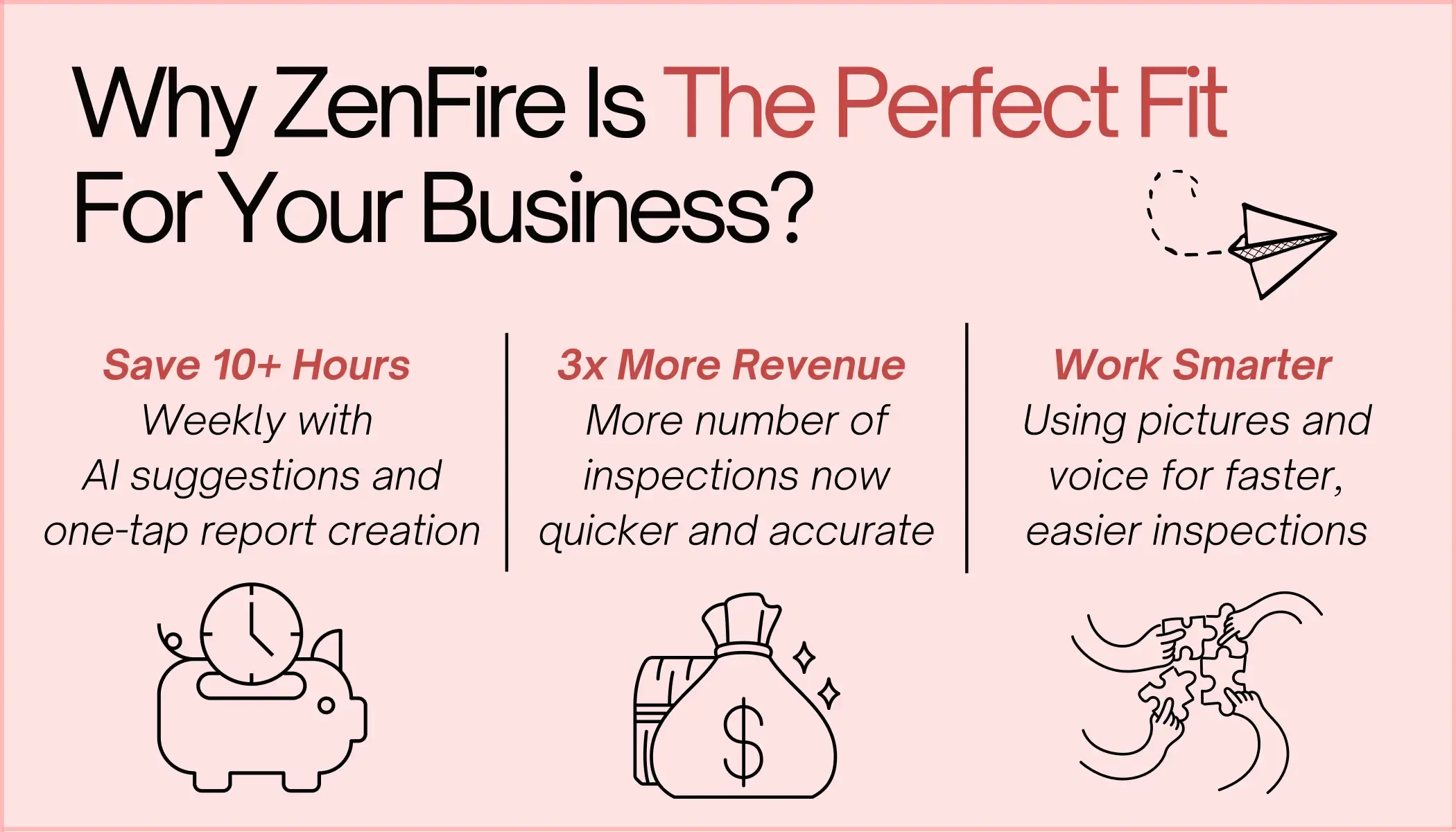
That is where ZenFire comes in. ZenFire gives fire protection teams the tools to track, schedule, and verify every piece of fire safety equipment across an entire portfolio from a single dashboard. Smoke alarms, fire extinguishers, sprinkler systems, carbon monoxide detectors every asset, every inspection, every deficiency logged and managed in one place.
With built-in NFPA checklists, AI-powered deficiency detection, and compliance reporting that holds up under scrutiny, ZenFire transforms how fire protection companies operate reducing the administrative burden and ensuring nothing falls through the cracks.
If you manage fire safety at scale, book a free demo today and see how ZenFire can bring order, accuracy, and confidence to your fire protection operations.
Get Insights Delivered Straight
To Your Inbox!
Related Reading

Why Your Field Software Management Software Needs QuickBooks Integration
ZenTrades Why Your Field Service Management Software Needs QuickBooks Integration Read More Request Demo...
Read More
ZenTrades How To Manage Electrical Service Agreements Like...
Read More
ZenTrades The Best 5 Jobber Alternatives In 2023...
Read More