
Commercial Fire Suppression System: Types, Costs, and How to Choose the Right One
- March 30, 2026
- 9 Min Read

- Suppression systems don’t just warn, they fight fires directly.
- 7 system types exist; picking the wrong one can cost you everything.
- Prices range from $2–$15/sqft, know what you’re paying for.
- Kitchens, data centers & warehouses each need a different system.
- Skip annual inspections ($500–$1,000) and face fines, voids & liability.
According to Precedence Research, the US fire protection systems market is currently valued at $22.74 billion and is projected to reach $41.83 billion by 2034. That kind of growth doesn’t happen by accident. It happens because businesses across the country are finally treating fire suppression as what it actually is. And yet, plenty of business owners still don’t fully understand what a commercial fire suppression system actually does, which type they need, or how much it will cost.
This blog covers every type of fire suppression system used in commercial buildings today, breaks down real installation costs, and gives you a clear framework for choosing the right system for your specific building and business.
Table of Contents
What Is a Commercial Fire Suppression System and How Does It Work?
A commercial fire suppression system is a set of fire protection systems and components specifically designed to detect, control, and extinguish fires in commercial buildings before they cause catastrophic damage. It’s not the same as a fire alarm. A fire alarm detects a fire and alerts people. A fire suppression system actually addresses it by releasing water, chemical agents, inert gases, or foam directly into the affected area to suppress flames and prevent the fire from spreading.
Most commercial fire suppression systems work in one of two ways. Direct release systems automatically release the fire-suppressant chemical directly onto the fire, targeting the source immediately. Indirect release systems flood the entire protected area with the suppression agent, which is more effective in enclosed spaces where the fire may not be pinpointed precisely. Both approaches can be activated by heat, smoke, or a combination of both, depending on how the system is configured and what the environment demands.
Fire suppression systems are also an integral part of a broader fire protection strategy that includes fire alarms, fire detection devices, fire extinguishers, and fire doors. Each plays a different role. Fire extinguishers are a manual last resort for small, contained fires. Fire doors slow the spread of fire through a building. Fire alarms trigger evacuation. But when it comes to actually controlling a fire in a commercial environment, especially one that starts while the building is unoccupied or in a high-risk area, the suppression system is what does the heavy lifting.
Are Fire Suppression Systems Legally Required in the US?
Yes, Fire suppression systems are legally required in almost every commercial building in the United States, with specific requirements governed by federal guidelines, NFPA standards, and local fire safety regulations. The two most referenced standards are NFPA 13, which covers the installation of sprinkler systems, and NFPA 96, which directly governs fire suppression requirements for commercial kitchens. Both carry the weight of law in jurisdictions across the country, and failing to comply isn’t just a permit problem; it can result in fines, forced closures, and serious liability exposure in the event of a fire.
The specific fire safety regulations that apply to your building depend on your state, city, building occupancy type, and how it’s classified under local building codes. A warehouse in Texas operates under different requirements than a restaurant in New York or a data center in California. What’s consistent across all of them is the underlying principle: if people are in the building or valuable assets are at risk, the law expects a functioning fire suppression system to be part of the building’s safety infrastructure. Fire safety regulations aren’t suggestions; they’re the baseline.
What Are the Different Types of Fire Suppression Systems?
There are several types of fire suppression systems used in commercial buildings today, and the right one depends entirely on what your building contains, how it’s used, and what kind of fire risk is most likely. Here’s a full breakdown of every major type and where each one makes the most sense.
Water-Based Fire Suppression Systems (Sprinkler Systems)
Water-based systems are the most common type of fire suppression system installed in commercial buildings across the United States, and for good reason. They use a network of pipes to distribute water to connected fire sprinkler bulbs, which activate individually when they reach a certain temperature, so only the sprinklers nearest the fire activate, not the entire system at once.
What is the Installation cost of Water-Based Fire Suppression Systems (Sprinkler Systems)?
Installation costs for water-based sprinkler systems typically range from $3 to $7 per square foot, making them the most cost-effective option for most standard commercial environments. They’re governed by NFPA 13, and the 2025 update to that standard has expanded requirements to cover legacy warehouses and healthcare facilities that were previously exempt.
Clean Agent Fire Suppression Systems
Clean agent fire suppression systems use chemical agents or inert gases that extinguish fires without leaving any residue behind, no water damage, no chemical mess, and no cleanup that takes your operations offline for days. They are the best fit for Server rooms, data centers, telecom facilities, archival storage rooms, or any space where water or dry chemicals would cause more damage than the fire itself.
What is the Installation cost of Clean Agent Fire Suppression Systems?
Installation costs for clean agent fire suppression systems typically range $8-15 per square foot for clean agent systems like FM-200 or Novec 1230: significantly higher than water-based sprinklers due to specialized agents and precision engineering. Initial costs range from $50,000-$150,000 for a typical 2,000 sq ft server room, plus $1,500-$3,000 annual maintenance for inspections and agent recycling.
CO2 Fire Suppression Systems
Carbon dioxide suppression systems work by displacing oxygen in the affected area, effectively starving the fire of what it needs to keep burning. They’re effective for ordinary combustibles, flammable liquids, and electrical equipment, and they require little to no cleanup after activation because CO2 simply dissipates into the air.
What is the Installation cost of CO2 Fire Suppression Systems?
Installation costs for CO2 fire suppression systems typically run between $3 and $8 per square foot due to the engineering complexity involved. They’re most commonly used in industrial environments, printing facilities, and spaces with significant electrical equipment or flammable liquids present.
Wet Chemical Fire Suppression Systems
Wet chemical systems are specifically designed to handle grease fires, which makes them the required suppression system for commercial kitchens under NFPA 96. Grease fires behave differently from standard fires. They burn at extremely high temperatures, they re-ignite easily, and water makes them worse, not better. Wet chemical systems release a liquid chemical agent that reacts with the cooking oils and grease to create a foam-like blanket that smothers the fire and prevents re-ignition.
What is the Installation cost of Wet Chemical Fire Suppression Systems?
For a small restaurant, installation of a wet chemical system for the kitchen typically costs between $3,000 to $8,000. Additionally, these are not optional in any commercial kitchen operating in the US. They’re a legal requirement and a practical necessity.
Dry Chemical Fire Suppression Systems
Dry chemical fire suppression systems use dry chemical powder to extinguish fires involving flammable liquids, industrial equipment, and electrical hazards. They’re fast-acting and effective across multiple fire classes, but they come with a notable downside: cleanup. The chemical powder is corrosive and difficult to remove, which means after activation, any equipment or surfaces in the affected area need to be thoroughly cleaned before operations can resume.
What is the Installation cost of Dry Chemical Fire Suppression Systems?
Installation costs for dry chemical fire suppression systems generally cost between $2 and $6 per square foot to install.
Foam Fire Suppression Systems
Foam fire suppression systems are used in areas where flammable liquids are stored or handled, such as chemical storage facilities, fuel depots, aircraft hangars, and similar high-risk industrial environments.
Foam works by covering the surface of the flammable liquid with a thick blanket that cuts off its oxygen supply and prevents vapors from igniting. These systems are highly effective for large-scale Class B fire risks and are commonly specified in oil and gas facilities, manufacturing plants, and anywhere that flammable liquid storage is a primary hazard. They’re not typically used in standard office or retail environments, but in the right setting, foam suppression is one of the most effective tools available for preventing catastrophic fire spread.
What is the Installation cost of Foam Fire Suppression Systems?
Foam fire suppression systems generally cost between $4 and $12 per square foot to install due to specialized foam concentrate tanks, nozzles, and NFPA 11 engineering requirements.
Water Mist Fire Suppression Systems
Water mist systems use very fine water droplets, much smaller than standard sprinkler systems, to suppress fires while significantly reducing water damage to the surrounding environment. The mist absorbs heat rapidly and creates a steam barrier that displaces oxygen in the affected area, making it effective at controlling fire without saturating everything in the room.
What is the Installation cost of Water Mist Fire Suppression Systems?
Water mist systems cost $5-10 per square foot installed. For a 2,000 sq ft hotel wing or historic building, that’s $10K-$20K total, plus $1K-$2.5K yearly maintenance. Cheaper than clean agents, safer than regular sprinklers, a perfect middle ground for healthcare and heritage sites.
Which Fire Suppression System Works Best for Commercial Buildings?
The type of fire suppression system that works best for your business isn’t just about what’s cheapest or most popular. It’s about matching the system to the specific fire risks present in your environment. Different industries face fundamentally different hazards, and fire suppression systems designed for one type of environment won’t necessarily perform the same way in another. Here’s how the most common US commercial industries align with the available types of fire suppression systems.
Data Centers and Server Rooms
North America is currently leading the global data center fire detection and suppression market, and it’s not hard to understand why. Data centers and server rooms house millions of dollars’ worth of equipment and irreplaceable data, and a fire suppression system that causes water damage is almost as bad as one that doesn’t work at all. Clean agent systems, particularly FM-200 and Novec 1230, are the standard choice for these environments. They extinguish fires rapidly, dissipate cleanly without leaving residue, and don’t damage the sensitive electronic equipment in the affected area. Many large data centers use engineered fire suppression systems that are custom-designed for the specific layout of the facility, ensuring complete coverage in every zone.
Commercial Kitchens
Commercial kitchens are one of the highest fire-risk environments in any commercial building, and NFPA 96 exists specifically to address that risk. Wet chemical fire suppression systems are required for any commercial kitchen with cooking equipment that produces grease-laden vapors, which is essentially every restaurant, cafeteria, hotel kitchen, and food service operation in the country. The system is typically installed directly into the kitchen hood above cooking equipment, with nozzles positioned to flood the cooking surface and ductwork with the wet chemical agent the moment a fire is detected. For a small restaurant, this setup costs between $5,000 and $10,000. For a large commercial kitchen operation, costs go up proportionally, but the alternative, an uncontrolled grease fire, costs far more.
Warehouses and Manufacturing Facilities
Warehouses and manufacturing plants represent exactly the type of high-risk environments where comprehensive fire suppression is critical. Water-based sprinkler systems remain the most common choice for standard warehouse storage. They’re cost-effective, reliable, and well-suited to large open spaces where fire could spread rapidly across stored inventory.
Oil, Gas, and Industrial Equipment Environments
Oil, gas, and heavy industrial facilities are among the highest-risk commercial environments for fire. High temperatures, flammable liquids, pressurized equipment, and large volumes of combustible material create fire conditions that standard sprinkler systems aren’t built to handle. CO2 suppression systems are widely used in enclosed industrial equipment areas and electrical control rooms, while foam fire suppression systems are the standard for facilities with significant flammable liquid storage.
What Are the Key Components of a Fire Suppression System?
Understanding the components of a fire suppression system helps you ask better questions when talking to installers and makes it easier to evaluate whether a proposed system actually covers your building’s needs. Every commercial fire suppression system, regardless of type, is built around the same core functional elements.
Fire Detection Devices
These are the initiating devices that trigger the suppression system. They include smoke detectors, heat detectors, and flame detectors. Active detection systems require electrical power to continuously monitor for heat or smoke. Non-electric fire detection systems can operate without electricity, which is important in environments where power continuity can’t be guaranteed. The faster and more accurately a system detects fire, the sooner suppression begins.
Suppressant Delivery Systems
This is the functional heart of any fire suppression system: the pipes, nozzles, and delivery mechanisms that actually get the suppression agent to the fire. In a fire sprinkler system, that means a pipe network with sprinkler heads that activate at a certain temperature. In a clean agent system, it means pressurized containers and nozzles calibrated to flood a space with the right concentration of agent.
Extinguishing Agents
Different suppression systems use different agents like water, wet chemical, dry chemical powder, CO2, foam, or clean agents like FM-200 and inert gases. Each agent works differently: water cools and quenches, CO2 and inert gases displace oxygen, chemical agents interrupt the chemical chain reaction of combustion, and foam creates a physical barrier over flammable liquids.
Alarm Control Panels
The control panel is the brain of the fire suppression system. It receives signals from detection devices, processes them, and initiates the appropriate suppression response. It also communicates with fire alarms to trigger evacuation notifications and, in monitored systems, sends alerts directly to emergency services.
How Often Do Fire Suppression Systems Need Maintenance and Inspection?
Installing a fire suppression system is not a one-time event. Every commercial fire suppression system requires regular inspection and ongoing maintenance to remain compliant with fire safety regulations and ensure it works when a fire occurs. A suppression system that hasn’t been maintained is not a safety asset; it’s a liability that gives a false sense of security.
Annual inspections of fire suppression systems are required under NFPA standards and typically cost between $500 and $ 1,000, depending on the system type and complexity. During an inspection, a certified technician verifies that detection devices are functioning correctly, that suppressant delivery components are in good condition, that agent levels are adequate, and that control panels and notification devices are all operational. Any components that have degraded or failed are flagged for repair or replacement before the system is signed off as compliant.
Regular maintenance beyond the annual inspection, cleaning nozzles, checking pressure levels, testing detection components, and replacing worn parts typically costs between $500 and $2,000 per year, depending on the system’s complexity and how many components need attention. Clean agent systems and CO2 systems tend to require more specialized maintenance than standard sprinkler systems due to the precision engineering involved. Skipping maintenance doesn’t just put you at risk during a fire it can void your insurance coverage, expose you to regulatory penalties, and create liability in situations where the system’s failure contributes to property damage or injury.
Older warehouses and healthcare facilities should pay close attention to local code adoptions of NFPA 13 2025 updates. While not mandating universal retrofits, many jurisdictions are tightening sprinkler requirements for high-risk occupancies. If you’re unsure about compliance, schedule an inspection with a certified fire protection contractor before regulators do it for you.
Final Thoughts: Fire Protection Systems that complete your Fire Safety Needs
A commercial fire suppression system isn’t just something you install to satisfy a building inspector. It’s the difference between a fire that gets caught and controlled in seconds and one that burns through everything you’ve spent years building. The right system properly specified, correctly installed, and consistently maintained can save lives, minimize damage, protect your assets, and keep your business operational through what would otherwise be a catastrophic event.
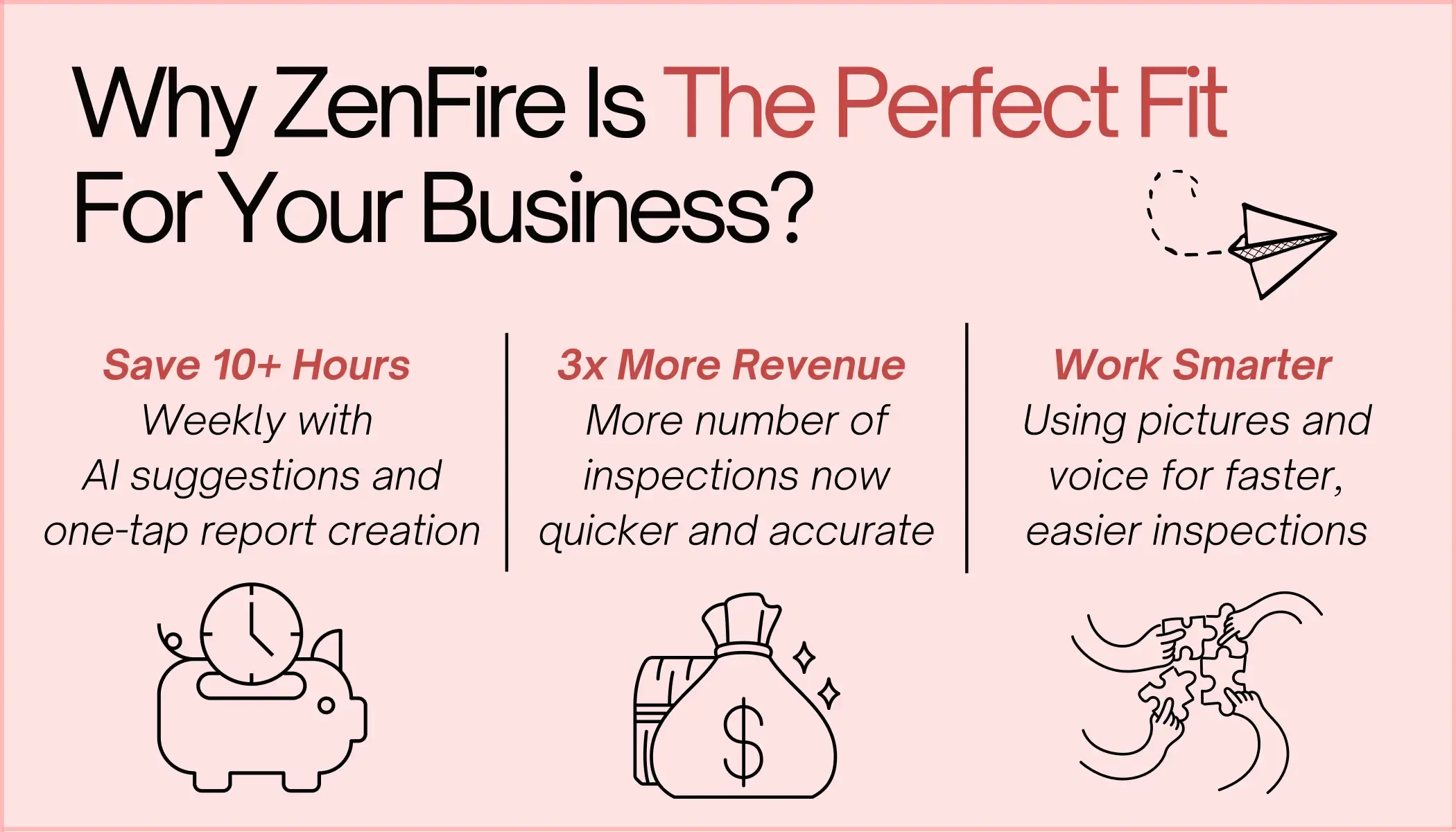
Whether you’re running a small restaurant that needs a wet chemical system over the fryers, a growing data center requiring clean agent protection for server rooms, or a manufacturing facility navigating complex compliance, ZenFire empowers fire inspection companies to track every suppression system, inspection schedule, and compliance deadline across client portfolios from one centralized dashboard.
Ready to eliminate missed inspections and manual tracking? Book a free ZenFire demo today and see how fire protection companies streamline thousands of suppression system inspections with zero compliance gaps.
Get Insights Delivered Straight
To Your Inbox!
Related Reading

Why Your Field Software Management Software Needs QuickBooks Integration
Zentrades Why Your Field Service Management Software Needs QuickBooks Integration Read More Request Demo...
Read More
ZenTrades How To Manage Electrical Service Agreements Like...
Read More
ZenTrades The Best 5 Jobber Alternatives In 2023...
Read More